By Prashant for Seniorpawsguide.com
Ensuring the best nutrition for our dogs is a responsibility every pet owner takes seriously. The 80/20 rule for dog food has become one of the most discussed feeding principles among veterinarians, nutritionists, and raw-feeding advocates. We explore this concept in-depth so pet owners understand what it means, how it supports health, and how to implement it safely at home.
Table of Contents
Understanding The 80/20 Rule For Dog Food
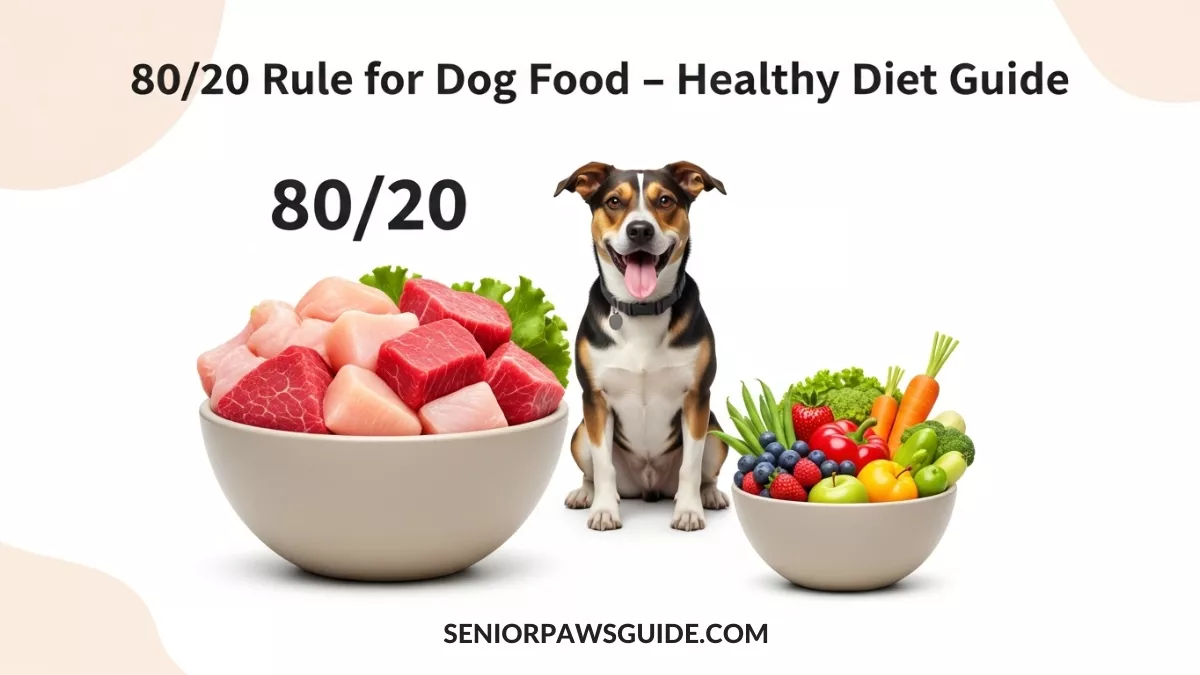
The 80/20 rule for dog food refers to a balanced dietary structure often used in raw feeding. According to this concept:
- 80% of the diet comes from animal-based ingredients
- 20% consists of fruits, vegetables, and other natural plant-based foods
This approach mirrors a canine’s natural dietary pattern while ensuring micronutrients, fiber, and antioxidants are included to support complete wellness.
Why The 80/20 Rule For Dog Food Matters For Health
Dogs are biologically omnivorous with a strong carnivorous leaning. The 80/20 rule for dog food allows them to benefit from muscle-building proteins while ensuring digestive and immune health.
Key benefits include:
✅ Optimal Protein Intake for muscle maintenance
✅ Better Digestion with nutrient-dense fiber
✅ Enhanced Immunity from vitamins and antioxidants
✅ Healthier Skin and Coat through balanced fats
✅ Weight Management due to natural food choices
This framework encourages whole-food nutrition rather than processed fillers found in many commercial formulas.
Breaking Down The 80% Portion: Animal-Based Nutrition
The largest part of the 80/20 rule for dog food includes:
Muscle Meat
Rich in high-quality proteins and amino acids such as taurine, essential for heart function.
Organs
Liver, kidney, and heart provide dense micronutrients like vitamin A, iron, and zinc.
Bone Content
Raw edible bones supply calcium and phosphorus for skeletal strength.
Animal Fats
A vital energy source, supporting metabolism and cognitive ability.
All components must be balanced to avoid deficiencies. For example, too much liver can cause vitamin A toxicity, while too much bone can lead to constipation.
Exploring The 20% Plant-Based Portion
The remaining portion of the 80/20 rule for dog food includes:
Vegetables
Carrots, broccoli, spinach, pumpkin
They provide fiber and essential vitamins.
Fruits
Blueberries, apples (without seeds), bananas
These offer antioxidants supporting heart health and immunity.
Herbs and Natural Supplements
Turmeric, parsley, kelp powder
These enhance digestion and internal cleansing.
Plant-based components must be finely ground or lightly cooked to make nutrients easily digestible.
Is The 80/20 Rule For Dog Food Suitable For All Dogs?
The 80/20 rule for dog food works best for healthy adult dogs. Certain pets may require different ratios, including:
| Dog Type | Consideration |
|---|---|
| Puppies | Higher protein + minerals for growth |
| Senior Dogs | Easier-to-digest proteins |
| Dogs with medical conditions | Tailored veterinary diets |
Before switching to the 80/20 rule for dog food, consulting a veterinarian is highly recommended.
How To Implement The 80/20 Rule For Dog Food At Home
Pet owners adopting this feeding method must ensure:
• Variety in meat sources (chicken, beef, turkey, lamb, fish)
• Proper organ-to-meat ratio (10% organs within the 80%)
• Safe handling of raw ingredients
• Portion adjustments based on weight and activity level
A general guideline:
| Dog Weight | Daily Food Quantity |
|---|---|
| 5–10 kg | 150–300 g |
| 10–25 kg | 300–500 g |
| 25+ kg | 500–900 g or more |
Feeding schedules depend on lifestyle, but most dogs thrive on two meals per day.
Choosing Commercial Food That Follows The 80/20 Rule
Not all owners can prepare raw food daily. Many high-quality brands now incorporate the 80/20 rule for dog food into their formulas to ensure balanced nutrition without the stress of preparation.
Look for labels that list:
✅ Meat as the first ingredient
✅ Limited fillers such as corn or soy
✅ Whole vegetables and fruits
✅ Natural preservatives only
These commercial options offer convenience while staying close to the 80/20 model.
Risks To Consider With The 80/20 Rule For Dog Food
Although highly beneficial, this diet requires careful attention:
⚠ Risk of bacterial contamination in raw meats
⚠ Difficulty achieving precise calcium-phosphorus ratio
⚠ Organ contribution must be monitored
⚠ Possible digestive adjustments during transition
Gradual diet changes are essential to avoid gastrointestinal distress.
Veterinarian Insights On The 80/20 Rule For Dog Food
Many experts appreciate the 80/20 rule for dog food for its natural approach. However, they emphasize:
• Regular health monitoring
• Periodic blood work
• Professional nutritional assessments
Balanced raw feeding can offer exceptional health benefits when overseen correctly.
Conclusion: Is The 80/20 Rule For Dog Food The Healthiest Choice?
The 80/20 rule for dog food stands out as a well-rounded, species-appropriate feeding method that aligns with canine biology. By prioritizing whole meats and natural plant-based nutrients, dogs experience improved energy, digestion, immunity, and overall wellness. With careful planning and veterinary guidance, this can be one of the best nutritional decisions for your furry companion.
FAQs About The 80/20 Rule For Dog Food
1️⃣ What foods should be avoided in the 80/20 rule for dog food?
Avoid chocolate, onions, grapes, raisins, cooked bones, and anything high in sugar or salt.
2️⃣ How soon can results be seen after switching to the 80/20 rule for dog food?
Most owners notice shinier coats, improved stools, and higher energy within 4–8 weeks.
3️⃣ Can the 80/20 rule for dog food include cooked proteins?
Yes. Cooked diets can follow the same ratio, although some nutrients require careful supplementation.