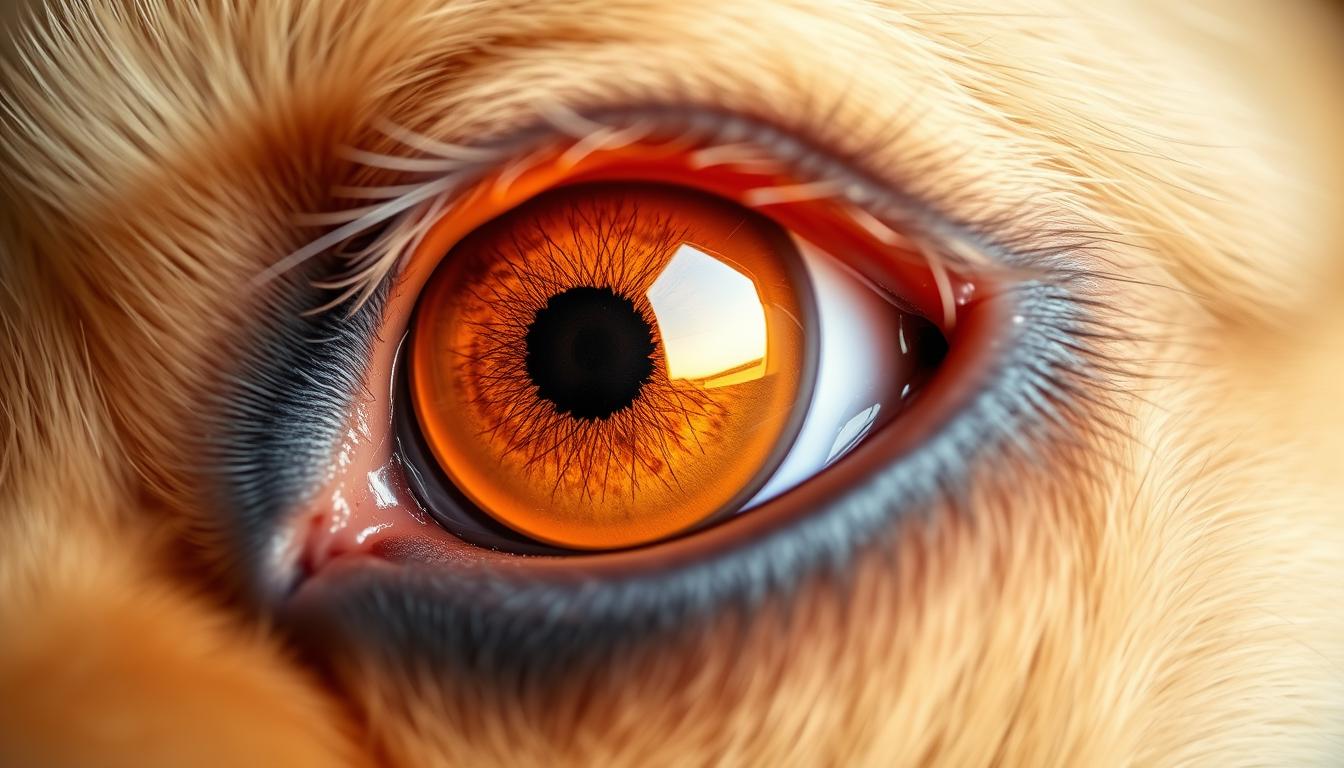
As canine companions age, they face more health issues. Cataracts can impair their vision. Cataracts in older dogs make daily life hard. Surgery is common, senior dog cataracts treatment without surgery ,but not all owners prefer it.
But, there are non-surgical treatments to help. Veterinary clinics and pet health sites share useful info. They focus on keeping canine eye health good.
Key Takeaways
- Understanding cataracts in older dogs and their impact on their quality of life.
- Exploring non-surgical management options for canine cataracts.
- The importance of maintaining overall canine eye health.
- Alternatives to surgery for treating cataracts in dogs.
- Insights from veterinary clinics on managing cataracts.
Understanding Cataracts in Senior Dogs
It’s important for dog owners to understand cataracts in senior dogs. This knowledge helps in caring for aging pets. Cataracts can greatly impact a dog’s life quality, so knowing how to manage them is key.
What Are Cataracts and How Do They Affect Dogs?
Cataracts in dogs happen when the eye lens gets cloudy, causing vision problems. They can come from aging, genetics, or health issues. As they grow, they can make it hard for dogs to see their surroundings.
Symptoms of cataracts in dogs include cloudy eyes, trouble seeing, and changes in behavior. Owners should watch for these signs and see a vet if they notice anything odd.
“Cataracts are a leading cause of vision loss in dogs, and their prevalence increases with age.” – American Veterinary Medical Association
Common Causes of Cataracts in Older Dogs
Cataracts in older dogs can come from genetics, environment, and health. Aging is a big risk factor, as the lens gets less flexible and clouds over time.
- Genetic predisposition
- Diabetes mellitus
- Trauma to the eye
- Inflammatory eye conditions
Knowing these causes helps owners prevent and treat cataracts early.
Breeds Most Susceptible to Developing Cataracts
Some breeds are more likely to get cataracts because of their genes. The table below shows some of these breeds:
| Breed | Prevalence of Cataracts |
|---|---|
| Cocker Spaniel | High |
| Poodle | Moderate to High |
| Labrador Retriever | Moderate |
Knowing these breeds helps owners watch for cataracts more closely.
Cataracts vs. Nuclear Sclerosis: Important Differences
Senior dogs often face eye problems like cataracts and nuclear sclerosis. These issues affect the eye’s lens but differ in cause, symptoms, and vision impact.
How to Tell If Your Dog Has Cataracts or Normal Aging Changes
Cataracts make the eye lens look cloudy or opaque, leading to vision loss. Nuclear sclerosis, however, is a gradual hardening of the lens nucleus with age. It might not affect vision much.
To figure out if your dog has cataracts or nuclear sclerosis, watch for signs. Look for changes in behavior, trouble navigating, or cloudy eyes.
Key differences: Cataracts grow faster and can cause more vision loss. Nuclear sclerosis is slower and might not lead to blindness.
When to Seek Veterinary Diagnosis
If your dog’s eyes or behavior change, see a vet. They’ll check the eyes and might do more tests to find the problem.
Early diagnosis helps manage the condition better. Your vet can suggest the best treatment and improve your dog’s life.
Diagnosing Cataracts in Senior Dogs
Getting a proper diagnosis is the first step in treating cataracts in senior dogs. A vet with special training in eye care will do this. They will look closely at your dog’s eyes.
Veterinary Examination Process
The vet will start by asking about your dog’s health and doing a physical check. Then, they will do a detailed eye check. This might include:
- Looking at the eyes closely
- Using a special light to see inside the eye
- Checking the back of the eye with a special tool
- Measuring the pressure in the eye
Advanced tools like electroretinography (ERG) might be used too. They help check how well the retina works.
Stages of Cataract Development
Cataracts go through different stages, from the start to fully developed. Knowing these stages helps decide the best treatment:
| Stage | Description |
|---|---|
| Initial | First signs of cataract |
| Immature | Cataract grows, affects vision |
| Mature | Lens is fully cloudy, vision is very bad |
What to Expect During an Ophthalmology Consultation
At an eye specialist visit, the vet will examine your dog’s eyes carefully. Dr. John Smith, a vet eye specialist, says, “A detailed check is vital for diagnosing cataracts right and finding the best treatment.” You’ll talk about your dog’s health, get a full eye check, and maybe more tests.
“Accurate diagnosis is key to managing cataracts effectively in senior dogs.”
The vet will use what they learn to make a plan just for your dog.
Senior Dog Cataracts Treatment Without Surgery Options
Cataracts in senior dogs can be managed without surgery. This offers hope for better vision and a better life. These treatments may not give perfect vision, but they can slow cataract growth and make your dog more comfortable.
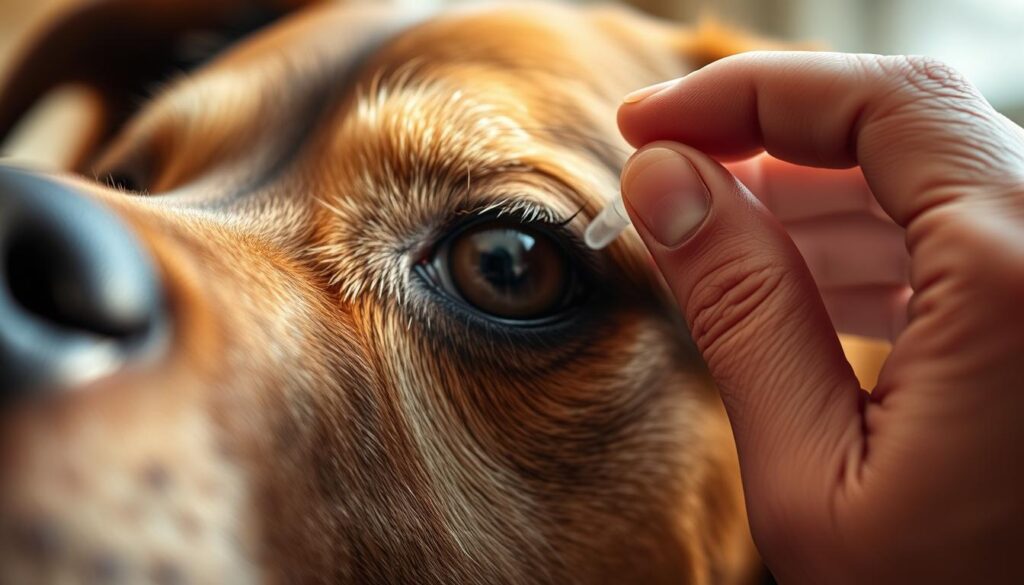
Medical Management Approaches
Managing cataracts in senior dogs often involves medicine and lifestyle changes. Anti-inflammatory eye drops can help reduce pain and swelling. Antioxidants are also used to slow cataract growth by fighting oxidative stress in the lens.
It’s key to work with a vet to find the right treatment for your dog. Regular vet visits are important to track cataract growth and adjust treatment plans as needed.
Alternative Therapies and Their Effectiveness
Some owners try alternative therapies for their dog’s cataracts. These can include homeopathic remedies, acupuncture, and nutritional supplements. While results can vary, some dogs may find relief from a holistic approach.
For example, omega-3 fatty acids, lutein, and antioxidants in supplements can support eye health. But, always talk to a vet before adding supplements to your dog’s diet to avoid any bad interactions or side effects.
Limitations of Non-Surgical Treatments
Non-surgical treatments can manage cataracts, but they have limits. Cataracts often get worse, leading to more vision loss. These treatments might not work for every dog, and success can depend on the case.
Remember, these treatments don’t cure cataracts but help manage symptoms. Regular vet visits are vital to keep track of your dog’s condition and adjust treatment plans as needed.
Supplements and Medications for Cataract Management
Supplements and medications play a big role in managing cataracts in senior dogs. They help support eye health and may slow down the cataract’s growth.
Antioxidants and Their Role in Eye Health
Antioxidants are key in keeping eyes healthy by fighting oxidative stress. This stress can lead to cataracts. Vitamin C and E are antioxidants that protect the lens in the eye. Studies show they can help keep the lens clear and support eye health in dogs.
Prescription Eye Drops for Cataract Management
Prescription eye drops are another way to manage cataracts. Some drops contain N-acetylcarnosine, which may reduce cataract severity. These drops are a non-invasive way to help manage the condition.
Oral Medications That May Help
Oral medications like lanosterol are being studied for cataract management. Lanosterol may reduce cataract severity by stopping lens proteins from clumping. More research is needed, but these medications show promise.
Natural Supplements with Potential Benefits
Natural supplements like omega-3 fatty acids and lutein may also support eye health. They are thought to improve overall eye well-being, which could help dogs with cataracts.
Here’s a comparison of the potential benefits of these supplements and medications:
| Supplement/Medication | Potential Benefit | Administration |
|---|---|---|
| Vitamin C and E | Antioxidant protection | Oral supplementation |
| N-acetylcarnosine eye drops | Improved lens transparency | Topical application |
| Lanosterol | Reduced cataract severity | Oral medication |
| Omega-3 fatty acids | Overall eye health support | Oral supplementation |
In conclusion, while supplements and medications are not a cure, they can be part of a comprehensive plan for managing cataracts in senior dogs. Always talk to a vet before adding any supplements or medications to your dog’s care plan.
Lifestyle Modifications to Support Dogs with Cataracts
Changing your dog’s lifestyle can really help them feel better with cataracts. As their vision gets worse, simple things can become hard. Making small changes to their world, food, and daily life can make a big difference.
Creating a Safe Environment for Vision-Impaired Dogs
It’s key to make a safe space for dogs with cataracts. Keep their favorite spots the same to help them move around better. Use non-slip mats and ramps to stop them from slipping. Also, block off stairs with gates to avoid falls.
Dietary Considerations for Eye Health
A good diet full of antioxidants is great for their eyes. Foods with omega-3 fatty acids and antioxidants like vitamin E are good. While food can’t cure cataracts, it can slow them down. Talk to your vet about the best food for your dog.
| Nutrient | Benefit | Food Sources |
|---|---|---|
| Omega-3 Fatty Acids | Reduces inflammation | Fish oil, flaxseed |
| Vitamin E | Antioxidant properties | Nuts, spinach |
| Lutein | Protects eye cells | Leafy greens, eggs |
Exercise and Mental Stimulation Adaptations
Exercise and mental games are important for your dog’s health. For dogs with cataracts, adjust their exercise to their vision. Short, gentle walks and playtime in familiar areas are safe and fun. Scent games and interactive toys keep them happy and engaged.
By making these changes, you can help your dog live better with cataracts. Always check with your vet before making big changes to ensure your dog gets the best care.
When Surgery Might Be Necessary Despite Alternatives
Even with non-surgical treatments, some dogs might need surgery for cataracts. The choice to have surgery depends on several things. These include how bad the cataracts are, the dog’s health, and how much the condition affects their life.
Signs That Non-Surgical Treatments Aren’t Sufficient
It’s important for dog owners to watch their pet’s condition closely. They should work with their vet to see if non-surgical treatments are working. If these treatments aren’t enough, you might see:
- Increasing opacity of the lens
- Deterioration of vision
- Increased risk of lens luxation or other secondary complications
Understanding Surgical Options If They Become Necessary
If surgery is needed, there are a few options. The most common is phacoemulsification. This method uses ultrasonic waves to break up and remove the cataractous lens.
| Surgical Option | Description | Success Rate |
|---|---|---|
| Phacoemulsification | Breaking up and removing the cataractous lens | 85-90% |
| Extracapsular Cataract Extraction | Removing the cataractous lens in one piece | 70-80% |
Recovery Process and Success Rates of Surgery
The recovery after cataract surgery is important. Dogs usually do well and see better. The success rate of cataract surgery is high, especially with phacoemulsification, which works for 85-90% of dogs.
Home Care Tips for Dogs with Cataracts
Home care for dogs with cataracts means managing their health and making lifestyle changes. As a dog owner, knowing how to care for your pet is key to their happiness.
Daily Eye Care Routine
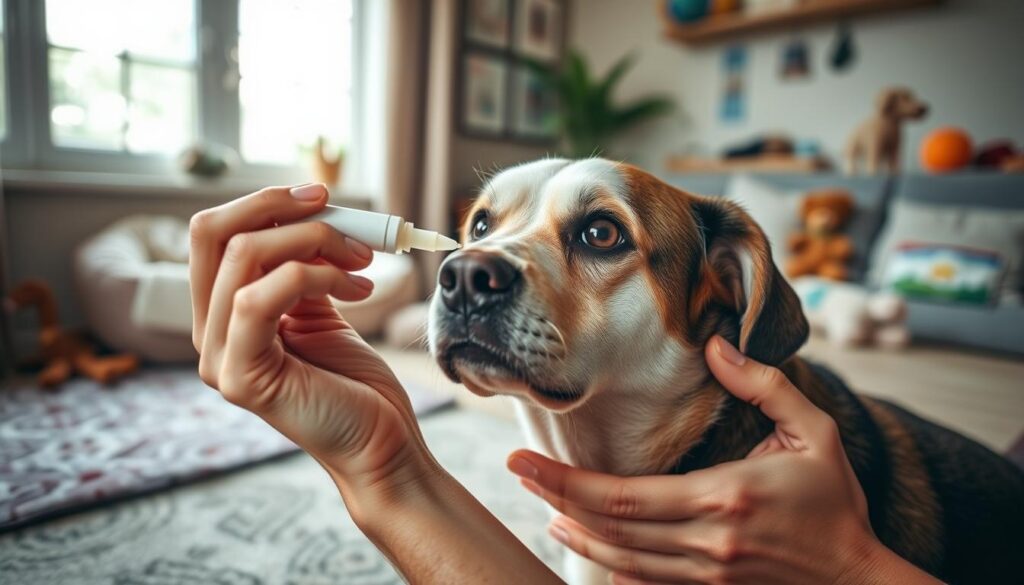
Creating a daily eye care routine is important for dogs with cataracts. Clean their eyes gently with a damp cloth to remove discharge. Veterinary advice suggests using a sterile, isotonic solution to avoid irritation.
Tip: Use a clean, soft cloth to wipe away debris. Avoid harsh chemicals or soaps.
Monitoring for Complications
It’s crucial to watch for complications like lens luxation or secondary glaucoma. Look out for signs like redness, pain, or increased pressure in the eyes.
“Regular check-ups with your veterinarian are crucial to catch any potential complications early.”
Helping Your Dog Navigate with Limited Vision
As cataracts worsen, your dog’s vision will get worse. Keep your home layout the same and don’t move furniture. Use verbal cues and guide them gently.
Consistency is key when helping your dog adapt to their limited vision.
Supporting Your Dog’s Emotional Well-being
Dogs with cataracts may feel anxious or depressed. Create a supportive environment with familiar routines and lots of love. This can help them feel better.
Conclusion
Caring for a senior dog with cataracts needs a detailed plan. This includes getting a proper diagnosis, treatment, and making lifestyle changes. Understanding cataracts and how to manage them is key.
Cataracts can greatly affect a senior dog’s health, leading to vision loss if not treated. Knowing the difference between cataracts and normal aging can help. This way, owners can get their pets the right care on time.
Managing cataracts in senior dogs involves several steps. These include medical care, alternative therapies, and making lifestyle changes. Creating a safe space, adjusting diets, and keeping their minds active can greatly improve their life.
In summary, caring for a senior dog with cataracts requires a complete approach. By staying informed and working with vets, owners can keep their dogs healthy and happy.
FAQ
What are the symptoms of cataracts in senior dogs?
Symptoms include cloudy or opaque eyes and vision loss. Dogs may also bump into things or have trouble jumping or climbing stairs. These changes can affect their behavior.
Can cataracts in senior dogs be treated without surgery?
Yes, there are non-surgical treatments. These include medical management, alternative therapies, and lifestyle changes. They can improve your dog’s quality of life.
What are the benefits of antioxidants for dogs with cataracts?
Antioxidants, like vitamins C and E, support eye health. They can slow cataract progression by reducing oxidative stress and inflammation.
How can I create a safe environment for my senior dog with cataracts?
Remove tripping hazards and block off stairs. Provide a clear path for your dog. Use verbal cues and gentle guidance to help them navigate.
Are there any prescription eye drops that can help manage cataracts in dogs?
Yes, some prescription eye drops can help. Drops containing lanosterol or carnosine reduce oxidative stress and inflammation. Talk to a vet about the best treatment for your dog.
Can diet play a role in managing cataracts in senior dogs?
Yes, a balanced diet supports eye health. Include omega-3 fatty acids, antioxidants, and essential nutrients. A vet can help choose the best diet for your dog.
How often should I monitor my dog’s eyes for complications?
Monitor your dog’s eyes daily. Look for redness, discharge, or other abnormalities. If you notice changes, consult a vet.
What are the signs that non-surgical treatments aren’t sufficient for my dog’s cataracts?
Signs include significant vision loss, increased eye pain, or secondary complications. If you see these signs, talk to a vet about the next steps.
How can I support my dog’s emotional well-being with cataracts?
Maintain a consistent routine and provide a safe environment. Offer love, attention, and reassurance. Mental stimulation, like scent games, can also help.









2 thoughts on “Best Senior Dog Cataracts Treatment Without Surgery”